


Indoor Soccer vs Outdoor Soccer for Kids: Which Is Better for Your Child?
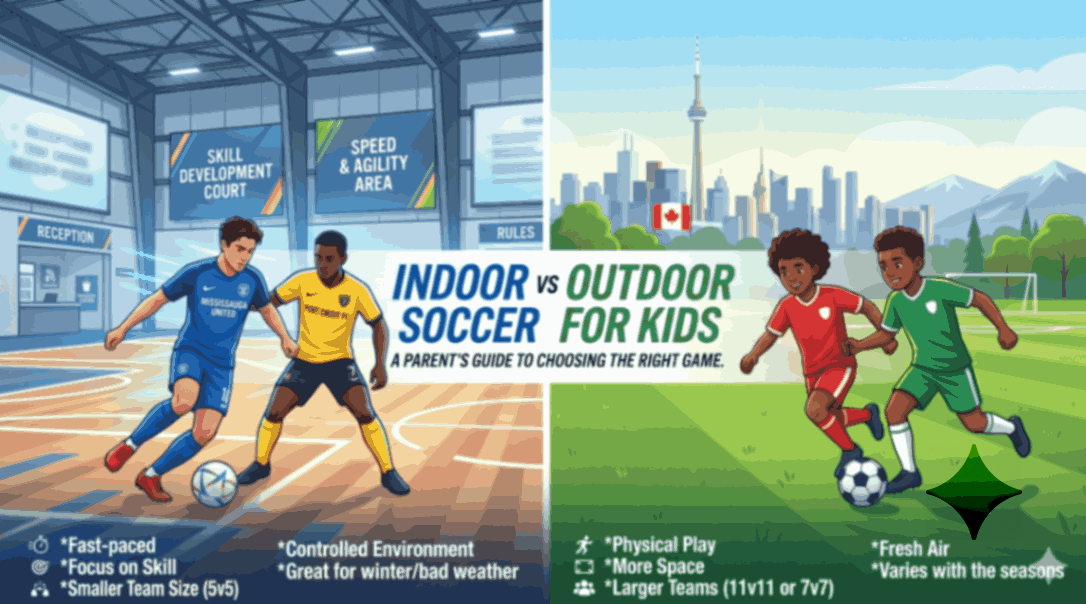
If you have an active kid who loves running, kicking, and scoring goals, you have probably asked yourself: should my child play indoor soccer or outdoor soccer? Both versions of the game offer tremendous benefits for kids — but they are not the same sport in terms of experience, skill development, and convenience.
In this guide, we break down the key differences between indoor and outdoor soccer for kids so you can make the best choice for your child's age, energy level, and lifestyle.
And if you are in the Mississauga area, we also share why KidSports Indoor Playground is one of the top spots for kids to enjoy safe, exciting indoor soccer year-round.
What Is Indoor Soccer for Kids?
Indoor soccer (also called futsal or arena soccer) is played on a smaller, hard or turf court inside a gym or sports facility. Teams are smaller — usually 4 to 6 players per side — and the game is faster-paced with more touches on the ball.
Key features of indoor soccer:
• Played on a hard court or artificial turf inside a building
• Smaller field, smaller teams, faster gameplay
• No weather interruptions — rain or snow does not stop the game
• Less running distance, but more ball contact per player
• Enclosed walls mean the ball stays in play longer
What Is Outdoor Soccer for Kids?
Outdoor soccer is played on a full grass or turf field with 11 players per side (or modified formats for younger kids). It is the traditional form of soccer played in leagues, parks, and schools across Canada.
Key features of outdoor soccer:
• Played on grass or outdoor turf
• Larger teams and bigger field
• More running and endurance required
• Seasonal — heavily weather-dependent in cities like Mississauga
• Teaches positional play, communication, and teamwork on a large scale
Indoor Soccer vs Outdoor Soccer for Kids: Head-to-Head Comparison
1. Skill Development
Indoor soccer wins for developing technical skills. Because the playing area is smaller, kids touch the ball far more often in an indoor game. This builds ball control, quick passing, and close-quarters dribbling at a faster rate than outdoor play.
Outdoor soccer, on the other hand, teaches long passes, positional awareness, and how to read a large field — skills that are harder to develop in a small indoor space.
Bottom line: Indoor soccer builds technical skill faster. Outdoor soccer builds tactical thinking over time.
2. Physical Fitness Benefits
Both formats are excellent for kids' physical development. However, they train different aspects of fitness.
• Indoor soccer: High-intensity bursts of speed, agility, and quick direction changes. Great for cardiovascular health and coordination.
• Outdoor soccer: Sustained running over a larger field builds endurance, stamina, and overall aerobic fitness.
For younger kids (ages 3 to 8), indoor soccer is often more appropriate because the shorter bursts of activity match their natural energy patterns — they sprint hard, then rest.
3. Weather and Accessibility
This is where indoor soccer has a massive advantage in Canada. In Mississauga, outdoor soccer is only realistic from May to October. For the other six months, the fields are wet, cold, or covered in snow.
Indoor soccer allows kids to keep playing and developing their skills all year long, regardless of the season. There are no rain cancellations, no frozen pitches, and no muddy gear to wash.
Facilities like KidSports Indoor Playground in Mississauga offer a safe, climate-controlled environment where kids can play soccer and stay active even in the depths of winter.
4. Safety
Indoor soccer environments are generally safer for young children for several reasons:
• Controlled surfaces reduce the risk of slipping on wet grass
• Smaller fields mean coaches can supervise all players easily
• No exposure to outdoor hazards like uneven terrain or extreme heat
• Enclosed spaces keep younger kids contained and focused
For toddlers and preschool-aged children, indoor soccer in a dedicated facility is much easier to manage and far less chaotic than outdoor play.
5. Social Experience
Both formats are excellent for social development, but they differ in format:
• Indoor soccer: Smaller teams mean every child is actively involved. There is no hiding at the back of the field. Kids interact constantly, which is great for shy or timid children.
• Outdoor soccer: Larger team dynamics teach kids how to work within a bigger group, understand roles, and develop leadership skills on a broader scale.
6. Cost and Convenience
Outdoor soccer typically requires league registrations, travel to different fields, equipment including cleats and shin pads, and parking at parks.
Indoor soccer at a family entertainment venue is often more flexible. At KidSports Indoor Playground, families can drop in for a session, book a birthday party with a soccer theme, or enjoy open-play time without committing to a full season league. You can book a session here.
At What Age Should Kids Start Playing Soccer?
Children can begin basic soccer activities as young as 2 to 3 years old. However, structured indoor soccer with rules and teams is typically introduced around ages 4 to 5.
Age-by-age guide:
• Ages 2–3: Unstructured kicking and ball play. Focus on fun and movement.
• Ages 4–5: Simple indoor games with soft balls. Learning to kick, run, and take turns.
• Ages 6–8: Ready for basic rules, small team indoor soccer, and developing ball control.
• Ages 9–12: Can handle both indoor and outdoor soccer with proper coaching.
For very young kids, indoor soccer at a playground facility is usually the ideal starting point because the environment is controlled, the staff are trained, and everything is scaled to their size.
5 Reasons Indoor Soccer Is Perfect for Kids in Mississauga
If you live in Mississauga or the Greater Toronto Area, indoor soccer is not just an alternative — it is often the smarter choice. Here is why:
• Year-Round Play: Canada's winters make outdoor soccer impossible for much of the year. Indoor facilities keep kids active and developing without seasonal interruptions.
• More Touches, Faster Learning: Indoor soccer gives kids far more ball contact per game. Research in youth sports development shows that more repetitions per session equals faster skill acquisition.
• Safer Environment: No muddy fields, no weather hazards, and no worrying about outdoor safety risks. Indoor playgrounds are designed with kids in mind.
• Great for Birthday Parties: Indoor soccer birthday parties are incredibly popular in Mississauga. Kids love active parties and parents love the convenience of an all-in-one venue.
• Flexible Booking: Unlike outdoor leagues that require full-season commitment, indoor facilities offer drop-in play, weekend sessions, and party packages that fit any schedule.
Indoor Soccer at KidSports Indoor Playground, Mississauga
At KidSports Indoor Playground, we have created one of Mississauga's most loved spaces for kids to be active, have fun, and develop real athletic skills — including soccer.
Our indoor facility is designed specifically for children, with age-appropriate activities, trained staff, and a safe, clean environment that parents trust.
What we offer:
• Open play sessions for toddlers and kids of all ages
• Indoor soccer and sports activities in a fully enclosed play space
• Birthday party packages with sports and soccer themes
• Safe, climate-controlled environment open year-round
• Convenient location in Mississauga, easily accessible for families across the GTA
Whether your child is just starting to kick a ball or is an enthusiastic young footballer ready to improve their skills, KidSports Indoor Playground is the perfect home base. Book your visit today and let the fun begin!
Frequently Asked Questions
Is indoor soccer better than outdoor soccer for young kids?
For children under age 8, indoor soccer is often better because the smaller space gives them more ball contact, the environment is safer, and it works year-round regardless of weather. Both formats are valuable as kids grow older.
What age can kids start indoor soccer?
Children can start enjoying basic indoor soccer activities from age 2 to 3. Structured indoor soccer games with teams and simple rules are typically suitable from age 4 to 5 onwards.
Does indoor soccer help with outdoor soccer skills?
Absolutely. The technical skills built in indoor soccer — dribbling in tight spaces, quick passing, fast thinking — directly translate to and improve outdoor soccer performance. Many professional players credit indoor and futsal play as key to their technical development.
Where can my child play indoor soccer in Mississauga?
KidSports Indoor Playground in Mississauga offers indoor play including soccer activities for children of all ages. It is a family-friendly facility designed for safe, active fun. Click here to book a session.
Final Thoughts: Indoor vs Outdoor Soccer for Kids
Both indoor and outdoor soccer are wonderful for children's physical, mental, and social development. The best choice depends on your child's age, the season, and what kind of experience you want them to have.
Choose outdoor soccer when the weather is good and your child is ready for the scale and endurance of the full game.
Choose indoor soccer when you want year-round play, faster skill development, a safer environment for young kids, and the flexibility of a drop-in or party format.
For families in Mississauga and the GTA, KidSports Indoor Playground makes it easy to give your child a fantastic indoor soccer experience all year long. Book your child's next session here — we can't wait to see them on the field!